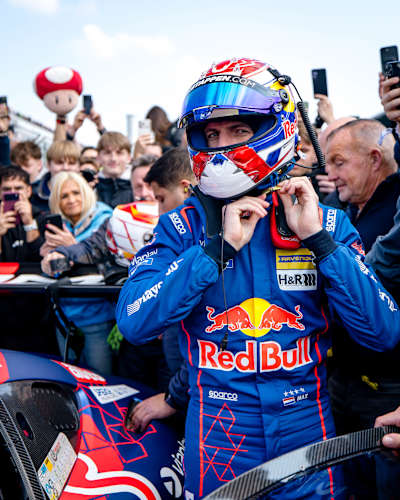
F1, the FIA and the engine makers have agreed a staged move away from the 50-50 power split for 2027 and 2028, handing more grunt back to the combustion engine after a driver revolt led by Max Verstappen and Fernando Alonso.
Formula 1's rule-makers have broken their deadlock over the sport's much-criticised power units, agreeing a staggered set of changes that will steer the 2027 and 2028 cars away from the contentious 50-50 split between combustion and electric power.
The package, thrashed out by the FIA, Formula 1 and the engine manufacturers, tilts the balance back toward the internal combustion engine in two steps. According to figures circulated after the agreement, the combustion-to-electric split moves from 53/47 in 2026 to 58/42 in 2027 and 60/40 in 2028. Combustion output climbs from 400kW this year to 420kW in 2027 and 450kW in 2028, helped by increased fuel flow, while the MGU-K's deployment is pulled back from 350kW to 300kW, though a 350kW "overtake" boost is retained. The FIA described it as "a staged rebalancing of Internal Combustion Engine and Energy Recovery System contribution across the 2027 and 2028 seasons." The proposal goes to the World Motor Sport Council in Macau on June 23 for ratification.
The driver who did most to force the issue sounded satisfied rather than triumphant. Max Verstappen, who had threatened to walk away from F1 if the cars were not improved, said the direction of travel was exactly what he wanted.
"It's definitely heading into a very positive direction. I think it's the minimum I was hoping for," Verstappen said. "I just want a good product in Formula 1, and that will for sure improve the product."
His frustration had been echoed up and down the grid. Fernando Alonso had derided the energy-management demands of the 2026 cars as a "battery world championship," complaining drivers were lifting and coasting to save deployment rather than racing flat out. The new numbers are aimed squarely at that, letting cars run harder for longer without running out of electrical energy on the straights.
FIA president Mohammed Ben Sulayem framed the agreement as proof the sport can still self-correct. "Formula 1 has always evolved to meet new challenges and seize new opportunities," he said. "These proposed changes reflect the collaborative work taking place across the sport to ensure the regulations continue to support exciting racing, technological innovation and long-term sustainability."
Not everyone is convinced the politics are over. McLaren boss Zak Brown welcomed the willingness to revisit the rules but warned that agreeing the principle is the easy part. "I think there's a good consensus that changes still need to happen," he said. "I'm encouraged that there will be, but then everyone's going to arm wrestle over specifically what those are." His plea was for the paddock to drop its self-interest: "People need to park their personal agendas, what they think might make it more competitive or less competitive, and all collaborate."
Red Bull team principal Laurent Mekies, whose driver had been the loudest critic, wanted assurances the fix would stick rather than reopening every few months. "I think we should fix it once and for all and not have this as a recurring topic," he said.
With ratification still to come and the manufacturers already locked into their 2026 designs, none of this touches the current campaign. Kimi Antonelli's runaway title lead is safe from any regulation rewrite. But for a sport that spent the winter braced for Verstappen's exit threat and Alonso's open contempt for the formula, simply agreeing a direction counts as progress.
---
*Originally published on [Newsformula One](https://newsformula.one/article/f1-drops-50-50-engine-split-in-staged-2027-28-rule-shift). Visit for full coverage.*