
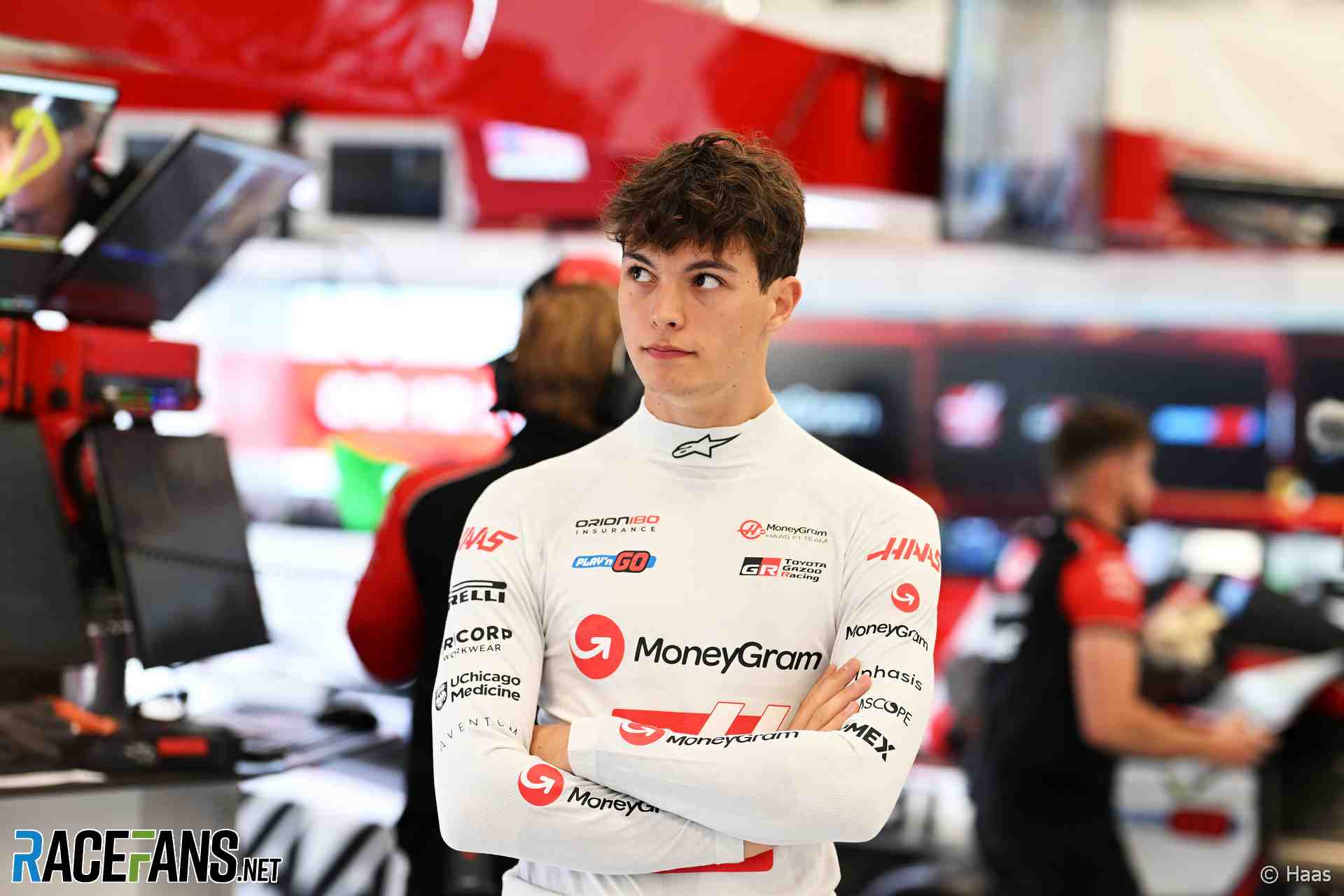
Oliver Bearman's 50G crash in Japan has become the first concrete proof of the 2026 regulations' closing-speed problem, with pundits, his Haas boss and McLaren's Andrea Stella all pointing at the gap between harvesting and non-harvesting cars rather than driver error.
When Oliver Bearman ploughed into the back of Franco Colapinto's Alpine in the closing stages of the 2026 Japanese Grand Prix and slammed the wall at a measured 50G, the Haas rookie's race ended in a crumpled mess of carbon fibre — and a debate that had been quietly running through the F1 paddock since pre-season testing burst into the open.
The verdict from those who watched it back was almost unanimous. Speaking on his stream as the replay aired, F1 commentator Kr1s described in real-time exactly what the engineering rooms had been warning about for months.
'OH MY GOD. NO. Ollie's in the wall. Ollie. Bearman's in the wall. Bam's out. Oh, that's safety guard. It's got to be a safety car,' Kr1s said as Bearman pulled himself slowly out of the cockpit. 'Oh, Ollie's limp. Oh no.'
The cause, in his telling and the FIA's own subsequent statement, was structural. Under the 2026 power unit regulations, the gap between a car deploying its electrical energy down a straight and one harvesting can swell to 50km/h or more — an enormous closing-speed delta that no F1 generation since the early turbo era has had to live with. Colapinto, on the data, was 60km/h slower than the cars around him at the point of contact because his Alpine was harvesting energy.
'This is the speed overlap everyone's been talking about,' Kr1s continued. 'This is the first crash we have because of someone harvesting. There you go. Regulations for you. It was just a matter of time.'
The Colapinto-as-villain narrative did not survive contact with the people closest to the incident. Haas team principal Al Kamatso, whose driver had just been the one in the wall, made a point of publicly clearing the Alpine man, telling reporters that Bearman's accident was a systems issue rather than a driver one. The FIA's preliminary investigation reached the same conclusion: high closing speeds were officially acknowledged as a contributing factor to the severity of the impact, and Colapinto was not held to blame.
What has frustrated the senior end of the grid is what the governing body did next. According to multiple paddock briefings since Suzuka, the FIA is preparing a series of regulation tweaks for Imola and beyond, but the priority on its agenda is qualifying procedure rather than the racing closing-speed problem that put Bearman in hospital for checks.
McLaren team principal Andrea Stella, who had publicly raised closing-speed concerns during the Bahrain pre-season test and was largely shrugged off at the time, has since pressed the FIA to flip those priorities. Stella's argument is straightforward: a closing-speed delta that produces a 50G impact in a race is a more urgent safety problem than a closing-speed delta that produces an awkward yellow flag in qualifying, and the regulator's response should reflect that.
The FIA, for its part, has been more careful in public. While accepting that the closing-speed differential played a role in the severity of the incident, it warned in a statement that any speculation about specific regulation changes would be premature. Translation: the next stage of the 2026 regulations review will look at the issue, but no commitment yet to a specific fix.
That positioning has done little to settle the drivers. Several have said privately they spend the energy-harvesting sections of straights scanning their mirrors for the closing rate of cars behind them rather than focusing on their own lap. As the early-season schedule pushes into Canada — a power-sensitive circuit dominated by long straights and short braking zones — the test that Bearman survived is unlikely to be a one-off.
For Bearman himself, the headline is that he walked away. A 50G impact in F1 a decade ago would have been a season-ending event. The car saved him, and Haas's preparation paid off. For everyone watching from inside the paddock, however, the story is not the rookie who survived — it is the structural problem the rookie's crash forced into the open.
---
*Originally published on [News Formula One](https://newsformula.one/article/bearman-50g-suzuka-shunt-2026-closing-speed-problem-stella-fia). Visit for full coverage.*